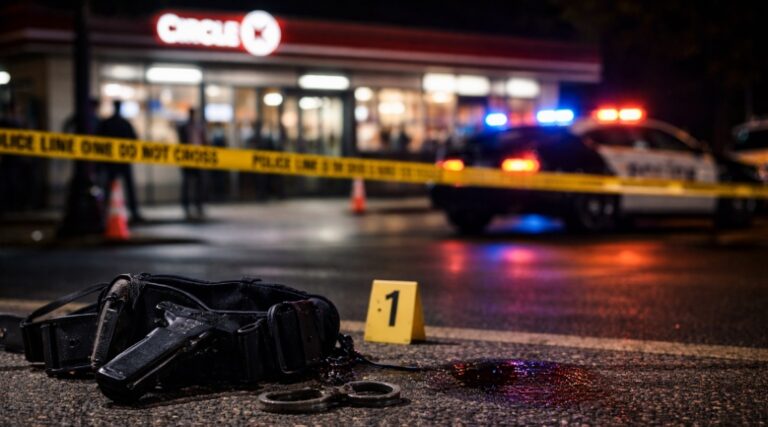
On Monday, September 15, 2025, what began as a routine visit to a convenience store quickly turned into a tragedy. Edgewater, FL Police Officer David Jewell was shot and killed by a Circle K clerk while off-duty in Ormond-by-the-Sea, Florida. The senseless act of violence underscores a harsh reality of law enforcement: danger does not pause when an officer takes off the uniform.
Officer Jewell joined the Edgewater Police Department in 2023 and had previously worked for nearly 20 years in the communications unit for the Volusia Sheriff’s Office. That day, he stopped at a Circle K to purchase a hot dog but instead became the victim of what Volusia County Sheriff Mike Chitwood described as “an out-and-out assassination.”
The incident serves as a sobering reminder that officer safety extends far beyond the boundaries of formal duty. Even off-duty, officers face unpredictable risks that demand heightened awareness, thoughtful policy reform, and comprehensive departmental support.
What Happened at Circle K
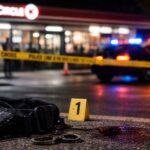
The shooting was reported around 4 p.m. on Monday at the Circle K gas station near Ocean Shore Boulevard and Wisteria Drive in Ormond-by-the-Sea.
Officer Jewell entered the store to buy a hot dog and proceeded to the register to pay. Eduardo Machado, a clerk employed at the Circle K who knew Jewell and was aware he was a police officer, exited the store as Jewell entered. Machado retrieved a jacket from a white Kia before returning inside. He then approached Jewell from behind and fired several shots at him. When Jewell fell to the ground, Machado’s gun jammed. After clearing the weapon, he fired several more shots at the fallen officer. Sheriff Chitwood estimated that 10 to 15 shots were fired in total.
Following the shooting, Machado changed his shirt and placed the jacket back into the white Kia. Another clerk at the store, who had been in the bathroom during the incident, exited and began walking away from the store with Machado. The suspect was taken into custody at the scene.
The motive behind this cold killing remains unknown and is still under investigation. Sheriff Chitwood emphasized in his press conference that the surveillance video clearly showed this was not a crime of passion or circumstantial escalation, but rather a premeditated attack.
A Routine Stop, A Life Lost
Officer Jewell’s visit to the Circle K exemplifies how everyday interactions can turn deadly in an instant. At gas stations, traffic stops, domestic calls, or during welfare checks, life-threatening encounters can develop without warning. According to FBI data, over 25% of felonious officer deaths between 2013 and 2022 occurred during unplanned or low-level engagements.
What made this tragedy especially striking was that Jewell was off-duty, away from the formal protections and protocols of his department. He was simply a customer in a familiar location. This is a critical vulnerability to officer safety: even moments of downtime can be fatal, as the lines between on-duty and off-duty life blur easily. Vigilance must remain constant, yet constant vigilance carries its own psychological and physical costs.
Officer Safety and Situational Awareness
Officers are extensively trained to respond to active threats and emergencies during their official duties. Often, these techniques don’t translate well to off-duty scenarios. While many officers carry weapons or remain alert around the clock, the informal settings of civilian life present unique challenges, making rapid threat assessment even more difficult.
The psychological toll of this reality cannot be overstated. Officers who understand that danger can strike anywhere, at any time, carry a burden of constant vigilance. This ongoing state of heightened awareness contributes to long-term stress, fatigue, and mental strain, which can affect their health, relationships, and overall well-being.
The Circle K tragedy underscores the need to expand our understanding of officer safety beyond traditional on-duty scenarios and to recognize the unique challenges officers face when operating in civilian spaces.
Funding, Training, and Policy Implications
Officer Jewell’s death highlights critical gaps in departmental support and preparedness. The incident underscores the need for increased funding for de-escalation training, defensive tactics, and mental health programs that address off-duty scenarios. While departments train officers extensively for their formal duties, comparable investment in protocols for unexpected conflicts and threats outside of official duty hours remains limited.
Updated departmental policies must support officers’ decision-making capabilities in unexpected and threatening situations, whether in uniform or off-duty. Additionally, if we want to create a safer environment and more informed public discourse on the topic, we must foster community awareness about the risks officers face.
Our Perspective
Officer David Jewell joined the Edgewater Police Department after serving as a telecommunicator with the Volusia Sheriff’s Office. He was recognized as the “Telecommunicator of the Quarter” in 2020 for his calm professionalism during a critical incident involving two severely injured young patients. Back then, Acting Police Chief Charles Geiger said, “He’s one of the nicest guys you’ll ever meet.”
His death serves as a sobering reminder that danger can strike at any time, and that it is not limited to high-risk calls or tactical operations. Without proper support, awareness, and investment in officer safety across all contexts of their lives, law enforcement personnel remain vulnerable, whether on or off the clock.
Supporting law enforcement must extend beyond tactical training and on-duty protocols. We need stronger safety standards and initiatives that protect our officers, alongside comprehensive wellness programs that provide physical protection and mental health resources alike.
Officer Jewell’s memory calls us to action.