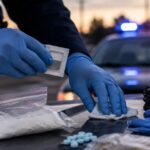

As synthetic narcotics reshape the drug landscape, law enforcement officers face a growing and urgent challenge: accidental fentanyl exposure during routine enforcement activities. Traffic stops, drug seizures, evidence handling, and search warrant execution all present opportunities for contact with fentanyl or fentanyl-laced substances.
Fentanyl is a Schedule II controlled substance approximately 100 times more potent than morphine, and can be lethal at doses as small as two milligrams. As its presence in illicit drug supplies grows, officer safety protocols must keep pace.
Why Fentanyl Has Changed Officer Safety
Fentanyl is not a new drug, but its widespread presence in the illicit drug supply has fundamentally changed the risk calculus for law enforcement. Originally used to treat severe chronic pain under medical supervision, fentanyl is now being mixed with heroin, methamphetamine, cocaine, and other substances by drug trafficking organizations. For officers, this creates compounding risk across common scenarios:
- Traffic stops and roadside drug discoveries
- Drug seizures involving powders, pills, or unknown substances
- Evidence handling, transport, and storage
- Search warrant execution in environments where fentanyl may have been packaged or used
These situations reinforce how routine law enforcement encounters can quickly become dangerous.
What Are First Defense Fentanyl Wipes?
One product built specifically for first responders is the First Defense fentanyl detection wipe, developed by Visual Detection Systems.
Designed for speed and simplicity, the wipes are intended to support rapid field testing without requiring specialized laboratory equipment. They can help identify potential fentanyl contamination quickly while also helping officers decontaminate their hands during field operations. Their design prioritizes ease of use, allowing officers to conduct on-the-spot presumptive testing without specialized laboratory equipment.
Visual Detection Systems notes that the product required years of formulation and field testing at police departments and sheriff’s offices using actual street fentanyl. The company’s mission is directly tied to officer safety: every day, they receive feedback from the first responder community affirming that tools like the First Defense wipe are needed.
Field-ready protective tools like these are a critical complement to standard PPE and established department protocols, giving officers an additional layer of situational awareness before and during potential exposure incidents.
Training, Awareness, and Preparedness
Equipment alone is not enough. NIOSH recommends that officers follow established safe operating procedures whenever illicit drugs may be present, including always wearing nitrile gloves, using respiratory protection when powdered drugs are visible, and avoiding actions that could make substances airborne. It is also important to wash hands with soap and water, rather than hand sanitizer, after potential exposure. As with technology used in modern policing, effective implementation depends on clear protocols, proper oversight, and officer training.
Likewise, officers should also be trained in naloxone administration and understand its limitations. Clear, standardized departmental policies for narcotics incidents are equally critical: when protocols are established and practiced, officers can act decisively rather than improvising under pressure.
Officer safety depends on more than awareness alone. It requires the right tools, the right training, and the right preparation before exposure happens.
Officer Safety and Operational Stress
The chronic risk of accidental fentanyl exposure adds a layer of psychological stress to an already demanding profession. Officers must remain alert and decisive in unpredictable environments, just as they do during targeted enforcement operations involving high-risk offenders, and the knowledge that an undetected substance could cause serious harm creates an additional mental burden.
When officers know their department has equipped them with effective detection tools, proper PPE, and clear protocols, they can focus on the task at hand rather than on preventable risks. Reducing avoidable hazards through preparation will support the mental resilience officers need to do their jobs effectively. Long-term resilience also depends on how officers maintain identities and pursuits beyond policing.
Funding and Accessibility Challenges
Even the best tools are ineffective if departments cannot access them. Smaller and under-resourced agencies face real barriers to procuring updated equipment and maintaining consistent training. Equitable, sustainable funding for narcotics safety resources across all jurisdictions is not optional and should be regarded as a baseline requirement.
Broader Implications for Modern Policing
The fentanyl crisis has accelerated a broader shift in how law enforcement must approach narcotics enforcement. Drug trafficking organizations have changed their methods, using counterfeit pills, novel packaging, and mixed substances to evade detection and increase potency. Officers at every level of enforcement must be prepared not just for what they know, but for what they have yet to encounter.
As a result, proactive safety strategies are increasingly essential components of effective, modern policing.
Our Perspective
National Police Support Fund advocates for sustained investment in officer safety equipment, training, and standardized narcotics protocols. No officer should face preventable risks due to a lack of resources. We support legislation and funding mechanisms that ensure every department, regardless of size or budget, can equip and train its officers for today’s narcotics environment.
Final Thoughts
Fentanyl has permanently altered the risk environment for law enforcement. The path forward requires departments to be proactive, acting on multiple fronts: adopting field-tested detection and decontamination tools, implementing NIOSH-recommended safety protocols, securing sustainable funding for officer safety programs, and fostering a department culture that treats preparedness as a core responsibility.
Investing in the right tools and training today is the most effective way to protect the officers who protect our communities.